
The Evolution of Portable Toilets: From Basic Units to Modern Luxury Restrooms
The Evolution of Portable Toilets: From Basic Units to Modern Luxury Restrooms
Portable toilets play a vital role in public health, safety, and convenience, appearing everywhere from construction sites to festivals. While they may not seem glamorous, their evolution from basic functional units to modern, sophisticated facilities is a story of innovation and progress.
For centuries, societies have faced the challenge of providing sanitation in areas without permanent plumbing. Today’s portable toilets are the result of advancements in engineering, materials, and public health awareness. Companies like SBC Waste have helped transform simple units into advanced solutions that prioritize hygiene, comfort, and sustainability.
From the first chemical toilets of the mid-20th century to today’s high-end restroom trailers, portable sanitation has become cleaner, safer, and more user-friendly, meeting the growing demands of modern society while addressing environmental concerns.
Early Innovations and Humble Beginnings
Before modern portable toilets, temporary sanitation was often crude and unsanitary. Armies, large work crews, and public gatherings typically relied on simple latrines or trench toilets – essentially pits dug into the ground. These offered minimal privacy and posed significant health risks due to waste exposure and potential water contamination.
The direct ancestor of today’s portable toilet emerged out of necessity during World War II. The booming shipbuilding industry in the 1940s faced a challenge: workers constantly left large vessels to use distant restrooms, wasting valuable time. To solve this, employers installed simple wooden cabanas equipped with small holding tanks directly on the docks. While these early units were heavy, difficult to clean, and prone to absorbing odors, they marked a crucial first step toward a portable, self-contained sanitation solution, significantly improving efficiency.
These rudimentary models were a far cry from what we experience today. Constructed primarily from wood and metal, they were cumbersome and deteriorated quickly. Their holding tanks were often basic buckets or drums, requiring frequent and unpleasant manual emptying. Deodorizing and advanced sanitation were non-existent, making the user experience far from pleasant. Nevertheless, these basic designs proved the concept of a movable, standalone toilet, laying the essential groundwork for all future innovations in portable sanitation.
Portable Toilets
Mid-Century Developments: The Dawn of Modern Sanitation
The 1950s and 1960s marked a turning point in the portable sanitation industry. This era saw the introduction of two crucial innovations that would define the portable toilet for decades to come: fiberglass construction and chemical deodorizers.
George Harding, co-founder of the Pacific Sanitary Company, is often credited with patenting the first fiberglass portable toilet in the 1960s. Fiberglass was a revolutionary material for this application. Unlike wood, it was lightweight, making the units much easier to transport and position. It was also non-porous, meaning it didn’t absorb odors and was significantly easier to clean and sanitize. This shift to fiberglass made portable toilets more practical, hygienic, and commercially viable.
Around the same time, the development of effective chemical deodorizers addressed one of the biggest complaints about portable toilets: the smell. Early deodorizers were typically formaldehyde-based. When added to the holding tank, these chemicals broke down waste and neutralized odors, making the experience far more tolerable for users. The most common combination was a blue dye mixed with the deodorizing chemical, which helped mask the contents of the tank and gave the liquid its signature blue color that is still widely recognized today.
These mid-century advancements transformed the portable toilet from a rough necessity into a standardized product. Companies could now manufacture and service units on a larger scale, leading to their widespread adoption at construction sites, parks, and special events. While still basic by today’s standards—often lacking a flushing mechanism, sink, or hand sanitizer—these chemical toilets established the fundamental design that would be refined and improved upon in the following years.
Modern Enhancements: A Focus on Hygiene and Comfort
The late 20th and early 21st centuries saw portable toilet design evolve rapidly, with a new emphasis on user comfort, enhanced hygiene, and operational efficiency. Manufacturers and service providers like SBC Waste began introducing features that are now considered standard in modern units.
Key Innovations in Standard Units:
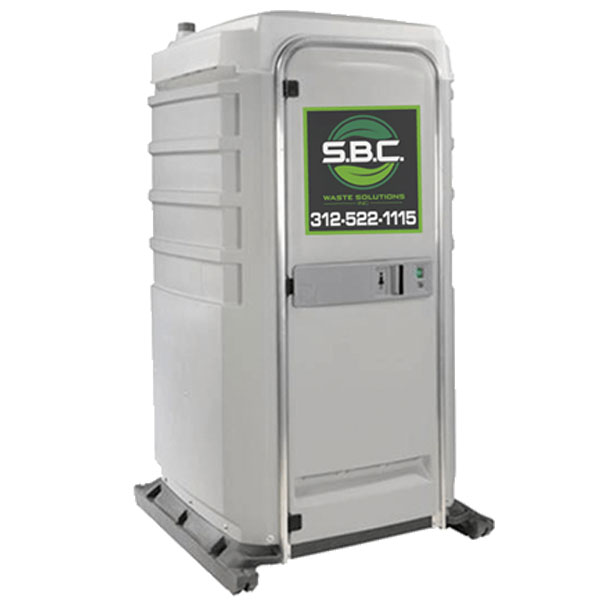
- Polyethylene Construction: Fiberglass was eventually replaced by high-density polyethylene (HDPE). This durable plastic is even lighter, more resistant to damage and graffiti, and can be molded into more ergonomic and user-friendly designs. Modern units often feature brighter, more spacious interiors thanks to this versatile material.
- Flushing Mechanisms: To improve hygiene and the user experience, simple flushing systems were introduced. These systems, whether operated by a hand pump or a foot pedal, rinse the bowl with the blue chemical solution from the holding tank, keeping the interior cleaner and more pleasant between servicings.
- Hand Sanitizer Dispensers: Recognizing the importance of hand hygiene, manufacturers began integrating hand sanitizer dispensers directly into the units. This simple addition was a major public health improvement, offering users a way to clean their hands without the need for a separate water source.
- Improved Ventilation: Early portable toilets were notorious for trapping heat and odors. Modern designs incorporate advanced ventilation systems, with vents strategically placed to promote airflow and release unpleasant smells, making the interior more comfortable.
- Urinals and Toilet Paper Dispensers: To improve convenience and hygiene, separate urinals became a common feature in standard units. Enclosed, multi-roll toilet paper dispensers were also added to protect the paper from moisture and ensure it’s always available.
SBC Waste has been a key player in bringing these modern enhancements to the market. By offering a fleet of well-maintained, modern portable toilets, they ensure that customers at construction sites and local events have access to clean, comfortable, and hygienic sanitation facilities. Their commitment to regular servicing and using high-quality supplies means that even their standard units exceed basic expectations.
The Rise of Luxury Portable Restrooms
As events like outdoor weddings, corporate functions, and VIP sections at festivals became more sophisticated, so did the demand for higher-end sanitation options. This led to the development of luxury portable restrooms and restroom trailers, which offer an experience comparable to a permanent indoor bathroom.
These are not your standard portable toilets. Luxury restroom trailers are designed with aesthetics and comfort in mind, providing a level of amenity that was once unimaginable in portable sanitation. SBC Waste is a leader in this premium category, offering a range of luxury options for upscale events.

Portable Toilets Service
Features of Luxury Portable Restrooms:
- Flushing Toilets and Sinks: High-end trailers feature porcelain flushing toilets and sinks with running hot and cold water, powered by onboard water tanks and pumps.
- Climate Control: Full climate control, including air conditioning and heating, ensures guests are comfortable regardless of the weather.
- High-End Finishes: Interiors often boast premium materials like wood cabinetry, granite-style countertops, decorative flooring, and elegant lighting fixtures.
- Spacious and Private Stalls: Instead of a single unit, these trailers feature multiple private stalls, often with full-length doors, providing greater privacy and reducing wait times.
- Amenities: Luxury units come stocked with premium amenities, including soft paper towels, scented soaps, mirrors, wastebaskets, and sometimes even background music systems.
These luxury options from companies like SBC Waste have revolutionized the event industry. They allow event planners to host high-end functions in any location without compromising on the quality of the restroom facilities. For a wedding in a scenic field or a black-tie gala under a tent, luxury restroom trailers ensure that guest comfort is a top priority.
Environmental Considerations and Green Initiatives
With growing global awareness of environmental issues, the portable sanitation industry has made significant strides toward sustainability. The focus has shifted to reducing water consumption, using eco-friendly chemicals, and implementing greener operational practices.
Key Eco-Friendly Innovations:
- Water-Saving Technology: Modern portable toilets are designed to be incredibly water-efficient. Flushing units use a minimal amount of recycled chemical water, and waterless urinals further reduce consumption.
- Eco-Friendly Chemicals: The industry has moved away from formaldehyde-based chemicals, which are harmful to the environment. Today, leading companies like SBC Waste use biodegradable, non-toxic deodorizers that effectively control odors without damaging ecosystems.
- Recycled Materials: Many portable toilets are now manufactured using recycled plastics, and the units themselves are fully recyclable at the end of their lifespan.
- Solar-Powered Features: Some advanced and luxury units incorporate solar panels to power interior lighting, fans, and pumps, reducing their reliance on external energy sources or generators.
- Sustainable Servicing Practices: SBC Waste is committed to green initiatives in its operations. This includes optimizing service routes to reduce fuel consumption and vehicle emissions, as well as responsible disposal of waste in compliance with all environmental regulations.
By prioritizing these green solutions, the portable sanitation industry is minimizing its environmental footprint and contributing to a more sustainable future.

Portable Toilets Service Provider
The Future of Portable Sanitation
Innovation in the portable toilet service industry is far from over. Emerging technologies are poised to make portable sanitation even smarter, cleaner, and more sustainable.
Future Trends to Watch:
- Smart Technology: The Internet of Things (IoT) is making its way into portable toilets. Sensors can monitor waste levels, supply levels (like toilet paper and hand sanitizer), and even foot traffic. This data can be transmitted in real-time to service providers like SBC Waste, allowing for “just-in-time” servicing. This optimizes efficiency, ensures units are never out of supplies, and prevents overflow.
- Self-Cleaning Technology: Imagine a portable toilet that cleans itself after every use. Research is underway on automated systems that can spray disinfectant and wipe down surfaces, drastically improving hygiene and reducing the labor required for maintenance.
- Advanced Waste Conversion: Future innovations may include onboard systems that begin to process waste immediately, converting it into energy or fertilizer. This would reduce the volume of waste that needs to be transported and disposed of.
A Legacy of Innovation
The journey of the portable toilet from a wooden box on a shipyard dock to a climate-controlled luxury trailer is a testament to human ingenuity. What began as a simple solution to a practical problem has evolved into a sophisticated industry that balances functionality, user experience, and environmental responsibility.
Companies like SBC Waste are at the heart of this evolution. By consistently adopting the latest technologies, offering a diverse range of products from basic units to luxury trailers, and committing to sustainable practices, they are not just providing a service—they are advancing public health and convenience. The next time you see a portable toilet, take a moment to appreciate the decades of innovation that have made it a clean, safe, and indispensable part of our modern world.
https://www.google.com/maps?cid=4180240075447051620


